


Super Sukhoi First
By Rohit Srivastava
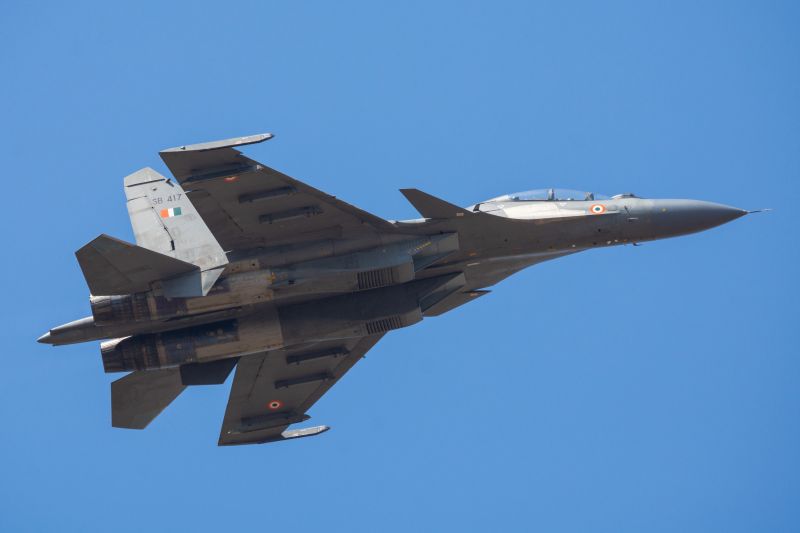
The Indian Air Force (IAF) today faces a critical juncture in its modernization drive. While the Rafale has brought cutting‑edge capabilities, the Su‑30MKI remains the true backbone of the force. With 270 aircraft in service, the Su‑30 fleet dwarfs the Rafale’s 36 jets, making it the most consequential platform for India’s air power. Prioritizing the Su‑30’s comprehensive upgrade over boutique Rafale enhancements is not just pragmatic—it is essential for sustained air dominance. India is at least one decade behind in Su-30 MKI modernization. Fighter jets undergo mid life upgrade after 15 years. India began inducting Su-30s in 1997 and the first Su-30 MKI version joined IAF in 2002. Thus, the mid-life upgrade should have started in around 2015.
The Su‑30MKI is the IAF’s workhorse, and its sheer numbers mean that any upgrade program has a force‑wide impact. In contrast, the Rafale, despite its sophistication, remains a niche capability. Reports suggesting upgrades for around 180 Su‑30s are inadequate; the entire fleet must be modernized in a time‑bound manner. Rest of the jets can be upgraded for various emerging roles like Drone-Missile hybrid and EW warfare carriers.
One of the Su‑30MKI’s greatest strengths lies in its payload capacity. With the ability to carry nearly 8,000 kilograms of weapons and equipment. It is uniquely suited for long‑range strike missions and heavy payload delivery. This capacity opens up possibilities beyond conventional roles. The Su‑30 can be adapted into a drone carrier, deploying swarms of air‑launched drones for reconnaissance and strike missions. It can also be configured as a dedicated electronic warfare platform, carrying powerful EW suites that suppress enemy radars and communications, thereby creating protected corridors for Indian missile launches. Such roles are vital in modern warfare, where electronic dominance often determines the outcome of air campaigns.
The Su‑30MKI’s open architecture further enhances its value, allowing seamless integration of both Russian and Indian weapons systems. This flexibility is unmatched by the Rafale, which is tightly bound to French supply chains. The Su‑30 can be armed with the R‑37M(Read here) long‑range air‑to‑air missile, capable of engaging high‑value targets at ranges exceeding 300 kilometers from within Indian airspace. It can also deploy Kh‑59MK2 or X‑69 (Read Here) cruise missiles for precision strikes against hardened targets. Most importantly, the Su‑30 is the only platform capable of carrying BrahMos ER variants, and can carry multiple BrahMos NG and indigenous Rudram I &II and under development Long-range Stand-off weapon (LRSOW) and Astra air-to-air missile cementing its role as India’s premier strike aircraft and ensuring strategic reach across the subcontinent.
The planned “Super Sukhoi” upgrade program promises to transform the Su‑30 fleet into a truly modern force. This includes the installation of GaN‑based AESA radars such as the Virupaksha, indigenous mission computers and avionics to reduce dependence on foreign suppliers, and enhanced electronic warfare suites ‘Talisman’ to boost survivability. Integration of next‑generation weapons, including Indian air‑to‑air and air‑to‑surface systems, will further expand its versatility. Crucially, this upgrade must be fleet‑wide, ensuring uniform capability across all squadrons. Snail-pace modernization to a fraction of the fleet would squander the Su‑30’s potential and weaken India’s air power.
Electronic warfare is increasingly the decisive factor in modern air combat, and the Su‑30MKI’s size and payload capacity make it uniquely suited to become India’s premier EW platform. Unlike smaller fighters, the Su‑30 can house high‑power jammers, radar decoys, and electronic support measures without compromising its weapons load. Indigenous EW systems tailored for the Su‑30 would ensure sovereignty and rapid adaptation to evolving threats. By deploying EW‑equipped Su‑30s, India can create sanitized zones where enemy radars and communications are suppressed, allowing safe launch of cruise missiles and drones. A few EW‑configured Su‑30s can shield entire strike packages, enhancing the survivability of Rafales, Tejas, and Jaguars operating alongside. In essence, the Su‑30 can evolve into a multi‑role electronic fortress, something Rafale’s smaller frame cannot replicate at scale. Similarly, keeping the jets payload capacity in mind, India can develop air-launched drones, drone-missile hybrid making Su-30s back-bone of futuristic air force.
India’s defence ecosystem is already deeply integrated with Russian platforms, which provides a significant advantage. Local industry is aligned with Su‑30 systems, enabling rapid upgradation cycles and localized integration. This reduces costs and timelines compared to Rafale’s dependence on French OEMs. More importantly, it ensures sovereign control, allowing India to tailor upgrades to its unique operational requirements without external vetoes.
In the evolving threat environment, India requires platforms that can deliver long‑range precision strikes, heavy payload delivery, and electronic dominance. The Su‑30MKI, with its size, adaptability, and integration potential, is uniquely suited to this role. Rafale, while technologically advanced, cannot match the Su‑30’s scalability or strategic depth. Moreover, the Su‑30’s ability to operate from within Indian airspace while deploying long‑range weapons like the R‑37M or BrahMos ER ensures reduced exposure to hostile air defences. Coupled with EW dominance, this makes the Su‑30 the decisive platform for India’s future air campaigns.
The debate between Rafale and Su‑30 is not about dismissing one platform over the other. Rafale adds valuable niche capabilities, but the Su‑30MKI must take precedence in modernization priorities. Its fleet size, payload capacity, adaptability, and EW potential make it the cornerstone of India’s air power. A time‑bound, fleet‑wide upgrade program—incorporating advanced radars, EW suites, indigenous avionics, and next‑generation weapons—will ensure the Su‑30 remains the IAF’s dominant force multiplier for decades. In contrast, focusing disproportionately on Rafale, in a rapidly changing security scenario and rapid obsolescence of technology, which is years away from induction may not bring India desired capabilities.
India’s strategic imperative should be to prioritize modernization, reimaging and rearming of Su-30 MKI over investment in any new 4-gen fighter programme, transforming it into a platform capable of delivering decisive air superiority and electronic dominance across the subcontinent.

