


Why Rafale is Not a Good Idea
By Rohit Srivastava
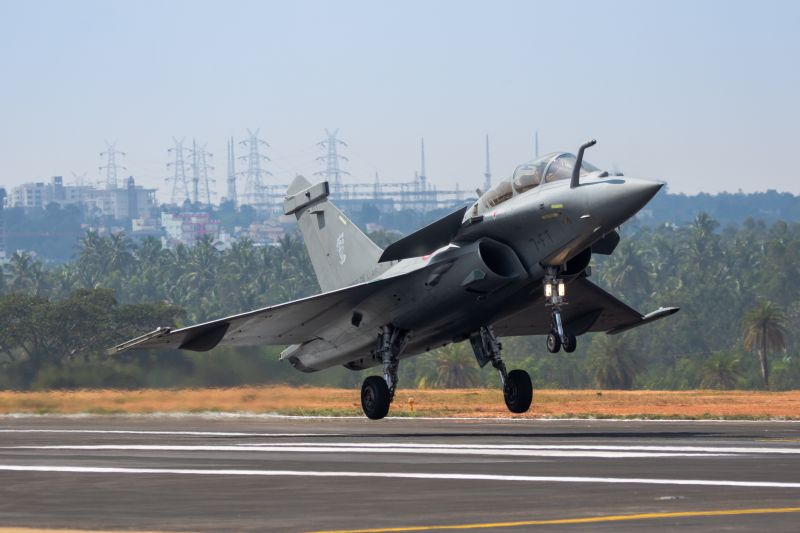
Defence Acquisition Council (DAC), apex body of ministry of defence (MoD), on Thursday, approved purchase of French multi-role fighter aircraft Rafale along with other equipment worth USD 40 billion. Reportedly, India is planning to acquire 114 Rafale jets for INR 3.2 lakh crore (USD 35 billion).
India operates 36 Rafale and last April ordered 26 maritime rafale for its Navy for INR 63,000 crore (USD 7 billion). The first 36 jets were purchased in 2016 for INR 59,000 crore (USD 6.5 billion). India selected Rafale M for Navy in July 2023.
With the new purchase, the total cost of Rafale jets is staggering USD 48.5 billion. Given the volatility in currency conversion the exact amount that India may pay would be much higher than the current projected price.
What is Multi-role Fighter Jet?
In mid ‘70s leading military powers of the world begin developing aircraft capable of replacing fighter jets designed for specialized roles – air superiority, ground attack, air interdiction, reconnaissance and surveillance, deep strike, nuclear deterrence etc. The idea was to develop one aircraft to replace all other aircraft. This idea led to the development of Eurofighter and Rafale in Europe, F-16, F-18, F-15 in US and Mig-29 and Su-27 Flanker in Russia.
The 4th gen fighters are system of systems. To executed various roles, these highly agile aircraft powered by very efficient and powerful engines, with high thrust to weight ratio, are equipped with AESA radars which can simultaneously identify, track and engage multiple aerial threats at long distance and can carry all kinds of ordnance for air-to-air and air-to-ground targets. They come with avionics which can fuse information from variety of on-board sensors and those coming from external sources like ground radars etc. The digital cockpit provide pilot with comprehensive and accurate picture of the area of operation helping it to choose and intercept its targets more efficiently. These jets allow pilot to lock and fire missiles through their heads-up display making target acquisition damn efficient.
The idea behind bringing so much capabilities within one aircraft was to reduce fleet size, manpower requirement, and air force budget while retaining capability against adversary. These advanced capabilities made developing these aircraft very difficult for nations. Besides, Russia, USA and France, no single nation succeeded in developing 4th gen fighter for simple reason they didn’t had 3rd gen jet technologies and developed military aviation ecosystem. Developing them independently took India and China over 30 years with mixed results. The final outcome is modest. Both nations had imported major subsystem in their jets. China learned the lesson and moved ahead with 5th Gen fighter jet program.
No need to develop something which is way past the selling date.
Is 4th Gen Fighter Relevant in Future War?
The relevance of fighters in ongoing Russo-Ukraine war, Iran-Israel conflict and Ops Sindoor clearly illustrate what role jets can play in modern warfare. In any contested air space with long-range surface-to-air and air-to-air missile backed with integrated air defence system, fighter jets can play only limited role of an aerial platform launching long-range ordnance. They can’t penetrate enemy air space without risk of interception by SAM batteries. Survival of fighters in a well defended air space is ‘difficult’, to say the least.
The Russo-Ukraine war is the best case to understand air battle of today. On the Ukraine side, NATO nations have multiple 4th gen fighters - Rafale, Eurofighter, F-16, F-15, and 5th gen fighters F-35 and F-22. But except F-16, in limited number, NATO has not provided Ukraine any other available fighters. Ukraine has already lost 4 F-16s and most of them are being employed to shoot Russian Geran drones and cruise missiles. They are not entering Russian air space and indulging in air combat or carrying out SEAD roles, for a simple reason, that they won’t survive S-400 led Russian multi-layered air-defence system.
Many of the jobs of multi-role fighters, like SEAD, ground attack, surveillance, reconnaissance are being carried out by kamikaze drones with better precision at negligible cost. While deep strike and air defence are being carried on by precision missiles at marginal cost and manpower employment. The only roles left exclusively for fighter aircraft are air-to-air interdiction and achieving air superiority. Even here drones are making inroad.
Iran and Russia have drones armed with air-to-air missiles while India and Turkey have tested similar system. Last year on July 25, DRDO successfully tested its UAV Launched Precision Guided Missile (ULPGM)-V3 from a drone developed by an Indian company. The According to DRDO, the “missile is equipped with three modular warhead options: Anti-armour to destroy modern age armoured vehicles equipped with Rolled Homogeneous Armour (RHA) with Explosive Reactive Armour (ERA); Penetration-cum-Blast warhead with Anti Bunker application and Pre-fragmentation warhead with a high lethality zone.”
In November, Turkish UCAV Kizilelma test fired its latest air-to-air missile Gökdoğan. Russia is arming its Geran-2 (Iranian Shahed 136) long-range one-way drones with MANPAD system for short-range air-to-air interception. Iran has developed a new concept weapon which is a drone-cum-missile known ‘358 missile’. It is launched like any drone and can independently identify aerial target using its heat seeker and intercept it like air-to-air missile. Iran and Houthis have used 358 to intercept American MQ1B. Reportedly, Houthis have downed 4 of these highly prized American UAVs. Iran has developed more agile and recoverable 359 with longer range.
The pace at which innovation and development is happening in UAV domain, one can expect them to carry out more sophisticated aerial role in near future.
Investing copious amount in a system which is becoming irrelevant by day is not a prudent decision. India needs to equip for a war that may happen tomorrow, not in some distant future. We need to buy things that can be delivered tomorrow not ten years later. Who knows what future holds. The pace at which things are happening it is almost impossible to predict how technology and geopolitics would evolve.
World is transitioning and wars are happening across the world. Faultline are becoming active. Wars can happen anytime, anywhere. Buy what can win wars in immediate future and invest in technologies in what we need ten years and beyond.

