


US Preparing Pakistan for Future Wars
By Rohit Srivastava
Pakistan and the United States have both suffered humiliating defeats at the hands of their long-term adversaries—India and Iran, respectively. The two countries share one of the deepest strategic partnerships in the post-World War II era. Pakistan has been developed and armed for the strategic purposes of the Western world, led by the US, in the West Asia/South Asia region. The simultaneous defeat of the two countries has proven the limitations of conventional and nuclear deterrence against a futuristically equipped adversary.
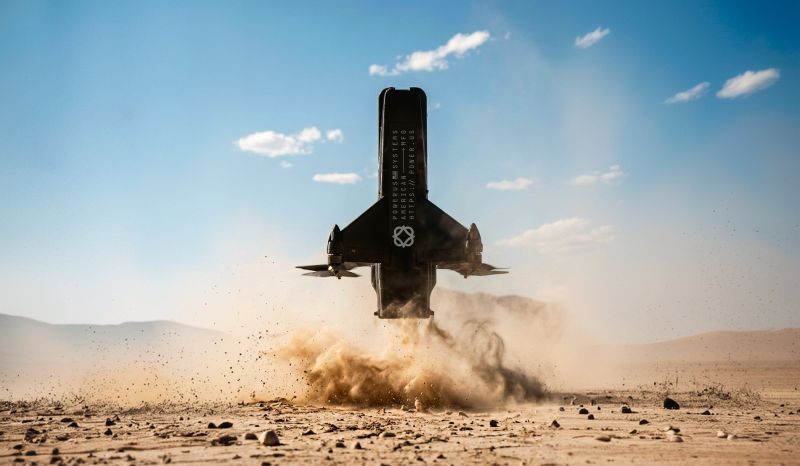
Learning these lessons and realising that legacy systems provide no deterrence, the US has initiated a new era of strategic partnership where Pakistan would be equipped with futuristic technologies to maintain its strategic relevance in its part of the world. The first step in this regard was taken last week when Pakistan and Powerus, a drone company with backing from President Trump's family, signed a comprehensive agreement with Pakistan.
The details of the partnership, drone models, and size of the order were not disclosed. The company is reportedly merging with Aureus Greenway Holdings, a publicly traded company backed by US President Donald Trump Jr. and his son Eric Trump.
Partnership
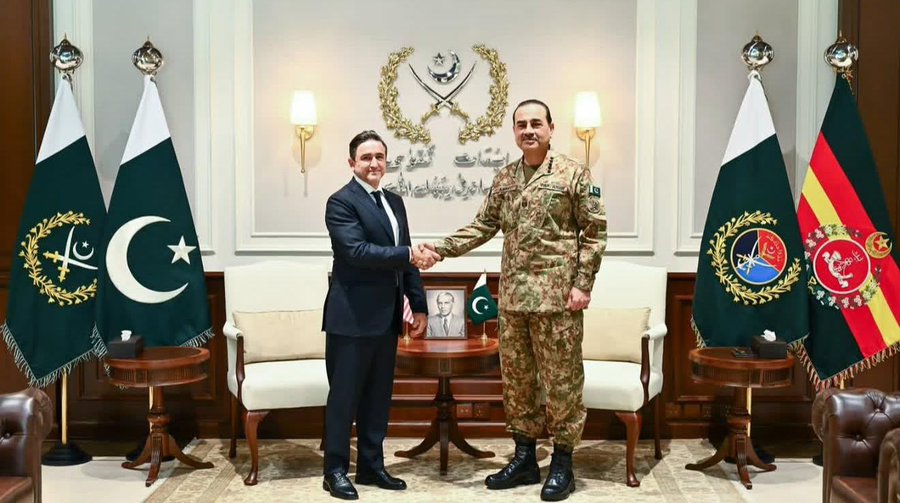
On September 16, US drone maker Powerus signed a Memorandum of Understanding (MoU) with the Pakistan Army covering a technology partnership for local production of drones through licensed production.
"A Powerus delegation led by Co-Founder Brett Velicovich was received by Field Marshal Syed Asim Munir, Chief of Army Staff and Chief of Defence Forces, at General Headquarters in Rawalpindi," the company said in a statement.
The Pakistan military announced the MoU in a statement, which covers cooperation in defence procurement, production, and capacity building, as well as mutual interest in pursuing emerging trends in defence technology. The two sides are interested in furthering their mutual interests through this partnership.
"This is an important milestone for Powerus as we expand our international defence footprint. We are proud to support Pakistan's Ministry of Defence, and the memorandum gives both sides a strategic framework to build upon," said Brett Velicovich, Co-Founder of the company.
Powerus
Aureus is a Nevada-based hospitality and recreation company that runs country and golf clubs. Powerus, co-founded by former US Army special operatives, builds "autonomous drone systems for military and commercial use in high-risk environments." The two companies "have entered into a definitive merger agreement." Powerus was founded in 2025. The company has achieved many successes in just one year. It has secured orders worth millions of dollars in just one year of operation. One cannot deny the fact that its success stems from Trump family support.
On March 9, Aureus announced the merger with Autonomous Power Corporation, doing business as Powerus (www.Power.us), in a press statement. "Upon completion of the merger, the combined company will operate under the name Powerus Corporation and work to support American drone industry dominance through domestic manufacturing, autonomous systems innovation, and strategic defence partnerships," the statement said.
Since March, Aureus has placed $79 million with Powerus as loans and investments.
On August 3, Powerus announced an award: an "indefinite-delivery/indefinite-quantity contract has a ceiling of up to $90 million and runs through mid-2028" from the US Air Force for Group 1 aerial-denial unmanned aircraft systems. Again, on August 13, the company received an order worth $2.5 million from the Department of War for 1,500 Matrix 7-inch First-Person-View drones.
On August 24, Powerus announced it was manufacturing its "Guardian counter-unmanned aircraft system interceptor line at a dedicated facility in the Gulf Cooperation Council region, established through a multi-year partnership with a regional defence manufacturer."
"Nations across the Gulf face a growing threat from inexpensive, mass-produced drones capable of striking energy infrastructure, ports, airfields, and population centres. Systems built to counter that threat have historically been produced far from where they are used, and delivery schedules have reflected that distance," the company said.
The facility will manufacture the Guardian interceptor, designed for countering attack drones and other aerial threats.
Alarming Development
The nature of this partnership needs to be analysed through the reshaping of the world order and the tension between India and the USA, which has always coupled India with Pakistan in its strategic calculations. As the India-US relationship warmed, Pakistan witnessed its slide in Washington. To ensure India became a strategic partner, the USA ensured Islamabad kept its jihadi aspirations under control. This helped the Indian government sell the US-India partnership to its people. Now, with the global situation changing, Washington has moved back towards the lapdog of the West: Pakistan.
The MoU suggests that this company may become the cornerstone of the US-Pakistan military technology partnership. The idea is to provide Pakistan with anti-drone and anti-air capabilities that can deny India the success of Ops Sindoor. Although the current systems of Powerus cannot provide such capability, the clause on co-development would allow the transfer of technology, localised production, and development of new systems to intercept Indian aerial munitions.
The real threat lies in the larger nature of warfare. This deal could be the beginning of re-equipping the Pakistan military with US-led Western systems after the failure of Turkish and Chinese drones and air defence systems.
Given global volatility, the chances of another war are high, and the lesson of Ops Sindoor for Pakistan is to acquire the capability to penetrate Indian air defences and defend its airspace. Pakistani leadership has suggested drone attacks on Indian ports and economic hubs like Mumbai. This is a real threat and a logical target in drone warfare. If there is one lesson for the world from the last year of the Ukraine war, it is that the West has worked out ways to penetrate Russia's formidable electronic warfare and air defence systems. Whenever they are able to push through, they target industrial and energy infrastructure.
Unfortunately, most of India's such infrastructure is closer to its western borders, thus susceptible to drone attack. This is a perfect strategy for any weak nation, supported by a more powerful nation, to use against a superior adversary. A perfect strategy for Pakistan.
This deal is just the start; better things will follow. The USA would equip Pakistan with every capability that can keep India under check. Pakistan was allowed to use Islamic militancy to keep India down for three decades. The powers of the world allowed it. They would ensure Pakistan has some amount of parity with India in the future.
India needs to look at this development with the seriousness it deserves. Military planners in New Delhi must be asked to plan for all eventualities. India needs to learn from Russia how to sustain long-lasting attrition warfare.

