


Countering Stealth is a Clear Priority for the IAF
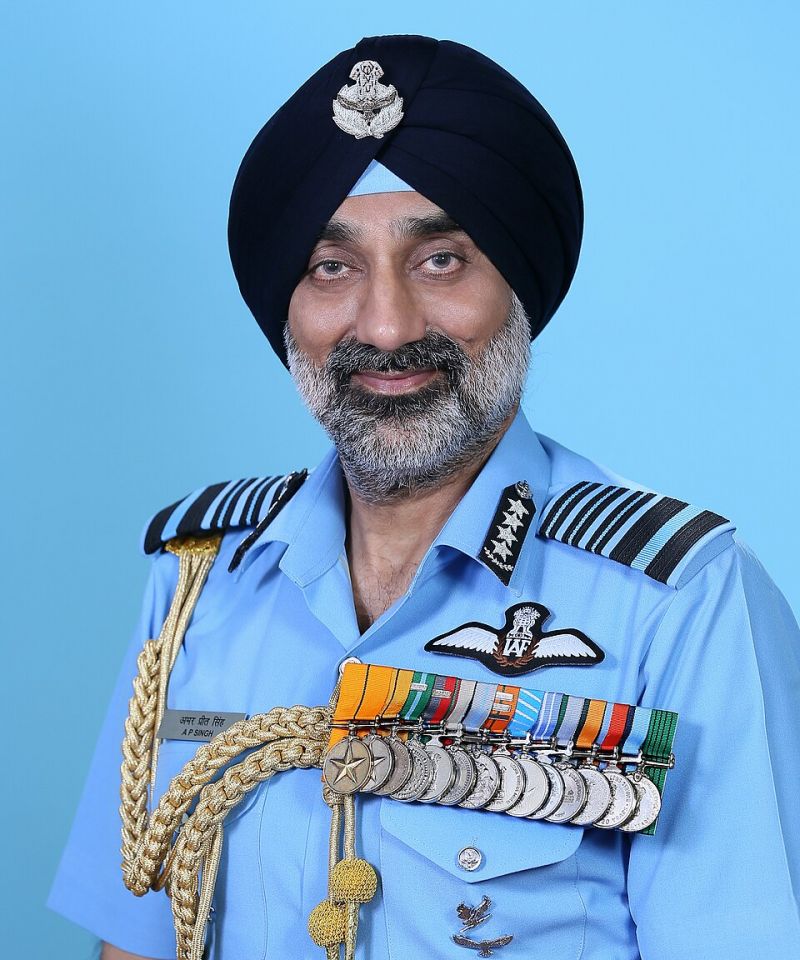
In response to a questionnaire shared by IDI on the eve of Air Force Day, Chief of the Air Staff, Air Chief Marshal Amar Preet Singh, shared the IAF’s perspective on various fighter programmes, as well as the role and relevance of air power in future warfare.
By Rohit Srivastava
Q1. What is the IAF’s perspective on the relevance of the AMCA in the future, given the condition of the project? Is it worth pursuing?
Ans. The Advanced Medium Combat Aircraft is not just another aircraft programme for the Indian Air Force. It is a national strategic undertaking, one that will shape both the combat capability of the IAF and the technological maturity of India’s aerospace ecosystem for decades to come. As to whether it is worth pursuing, my answer is an unequivocal yes. It is not merely worth pursuing; its success is essential.
Let me first place the programme’s progress on record. The Cabinet Committee on Security accorded sanction in April 2024 for the milestones and timelines proposed by DRDO. In May 2025, the Hon’ble Raksha Mantri approved the AMCA Programme Execution Model, moving the project to an industry-driven model. Under this model, the Aeronautical Development Agency executes the programme through industry partnership. Private and public sector companies compete on an equal footing, bidding independently, as joint ventures or as consortia. It is the first time the private sector has had the opportunity to participate alongside public sector companies in a defence project of this scale. The plan is to develop five prototypes, followed by series production. ADA, as the designer, leads the consortium with the active involvement of the IAF. The IAF carries out periodic reviews in coordination with all agencies and the Programme Management Team; the most recent review was conducted in July 2026. As per the CCS approval, induction is slated for the next decade.
Why does the AMCA matter so much? I would highlight four reasons.
First, operational necessity. The future battlespace will be highly contested, with dense air defence networks and long-range sensors and weapons. In such an environment, fifth-generation capability that combines low observability with advanced sensors and networked operations will allow the IAF to penetrate, survive and deliver effect where conventional platforms would be at far greater risk.
Second, the aircraft as a node in a networked force. The IAF is steadily moving from a platform-centric force to a networked combat system. A fifth-generation aircraft is ideally suited to be the sensing, fusing and commanding node in such a system, including as the manned element in future manned–unmanned teams. An indigenous platform gives us the freedom to design that role around our own doctrine, networks and weapons.
Third, strategic autonomy. A combat aircraft we design ourselves is one whose software, sensors, weapons integration and upgrades remain under our control throughout its service life. That independence matters most in crisis and conflict.
Fourth, the multiplier effect on the national ecosystem. The success of the AMCA programme is absolutely essential for developing next-generation technological capabilities across the Indian defence ecosystem, including the private sector. The technologies it demands, from stealth and advanced materials to sensor fusion, avionics and systems integration, will flow into other programmes. Any collaboration on a future sixth-generation programme will build upon and strengthen these indigenisation efforts; it will not substitute for them. Without the AMCA, we would enter the sixth-generation era as a buyer. With it, we will enter as a capable partner.
Security and self-sustenance: developing newer technologies in the defence-aerospace sector will give India a massive boost towards Atma Nirbharta and markedly improve our self-sustenance in defence. At present, the IAF remains heavily dependent on foreign partners for critical platforms, the most notable being fighter aircraft. Establishing a strong indigenous R&D capability will enable us to design and integrate home-grown weapons and next-generation technologies. This will not only place India at the forefront of aerospace innovation but will also enhance national security by reducing reliance on external sources.
Programmes of this complexity are demanding by nature, and no nation has developed a fifth-generation fighter without confronting significant challenges. What matters is whether the structures are in place to see the programme through. With CCS-approved milestones, an industry-driven execution model, sustained oversight and the IAF’s close involvement, these structures are now in place. The Indian Air Force is fully invested in the success of the AMCA, and we look forward to the day it takes to the skies as a statement of what Indian aerospace can achieve.
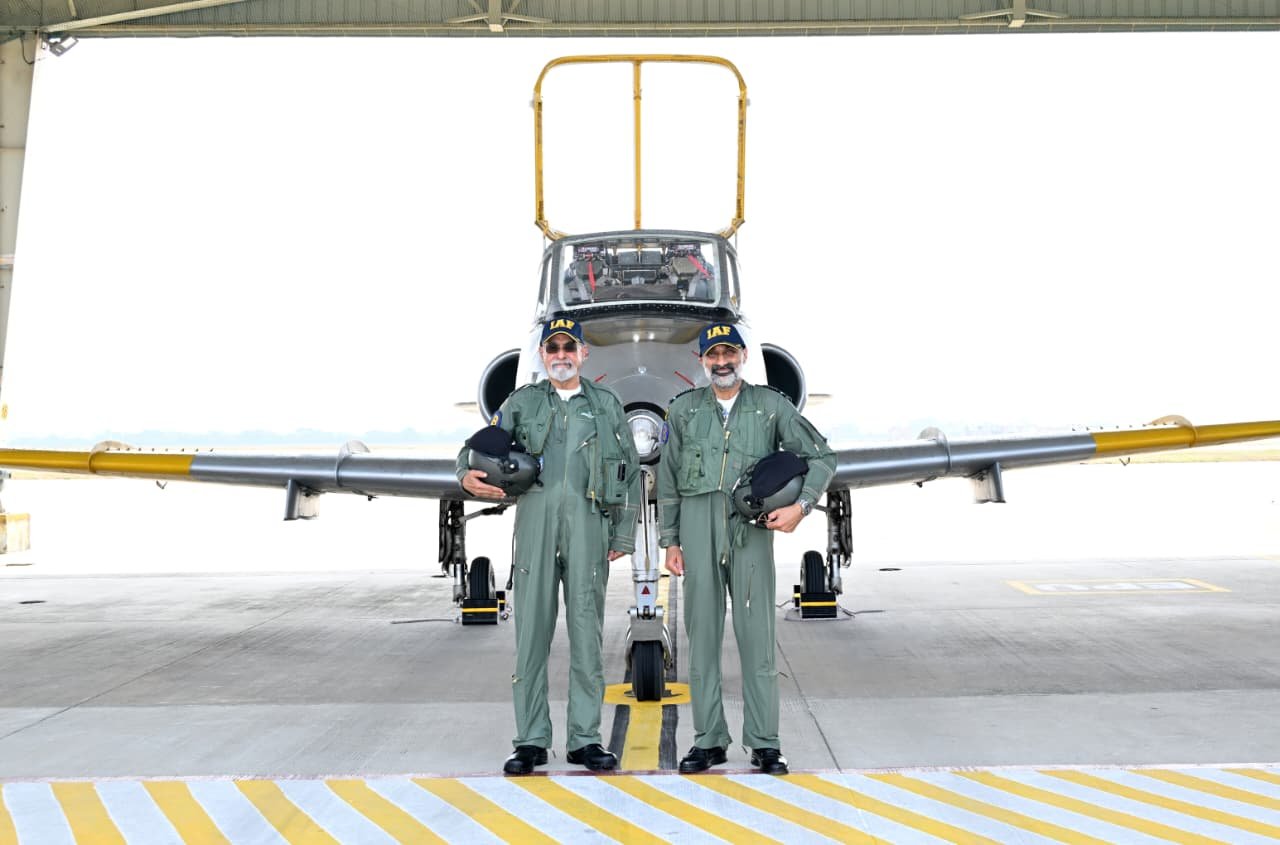
Q2. The IAF is sticking to fighter jet programmes conceived a decade or more ago. Warfare has changed. Technology is advancing at lightning speed. There is a serious question of the relevance of fighter jets in the future. Is it wise to stick to such programmes, or would it not be sensible to take a full stock of the situation and plan accordingly?
Ans. You are right that warfare is changing and that technology is advancing at an extraordinary pace. We must take stock of emerging technology and evolving warfare repeatedly, and we are doing so. But I would not frame the choice as one between continuing our fighter programmes and abandoning them for emerging technologies. That is a false choice.
The Indian Air Force follows a capability-driven approach to inductions, based on threat assessment, operational gaps and long-term strategic needs. Our long-term focus is firmly on self-reliance, especially in critical technology areas. At the same time, addressing interim challenges requires a calibrated approach, so that capability development remains robust and deterrence remains credible at every stage.
Let me also be clear on one point: I would refuse to conclude that the fighter aircraft is becoming irrelevant. What is changing is the manner in which a fighter will fight, the environment in which it will operate, and the capabilities with which it will be integrated. Its core purpose remains as vital as ever, because control of the air is still the prerequisite for any other military operation. Control of the air determines whether ground, naval and other forces can operate freely. Only a high-performance manned fighter can reliably engage enemy fighters, intercept high-speed threats and enforce air dominance in a contested environment.
The human in the cockpit is central to this. In highly dynamic air combat, whether within visual range or beyond it, pilots bring situational awareness, intuition and rapid judgement that remote or autonomous systems cannot yet reliably replicate. Complex rules of engagement, identification of friend or foe, and lawful target selection all demand a human in the loop.
The fighter is equally a node in the modern sensor-to-shooter network. It fuses data from satellites, airborne warning aircraft, ground radars and unmanned systems, and then delivers kinetic effect. It is also a launch platform for long-range precision weapons that extend the Air Force’s reach. It adds resilience too. A force that relies solely on unmanned systems or ground-based air defence creates a single point of failure. Manned aircraft can continue to operate, using onboard navigation and proven tactics, even when communications or satellite navigation are degraded.
Fighters are also instruments of deterrence and strategic signalling. A nation that retains a capable, indigenous fighter fleet is far less vulnerable to coercion, and that strengthens its hand well beyond the battlefield.
The correct approach, therefore, is a balanced and adaptable combat ecosystem. In it, fifth-generation and advanced fourth-generation aircraft, unmanned and autonomous systems, long-range weapons, electronic warfare, space-based capabilities and integrated networks all have a role to play. That ecosystem must be planned across immediate, next-decade and longer-term horizons, so that no capability vacuum is created while new technologies mature.
Our programmes reflect exactly this. The IAF is committed to the Tejas programme and awaits the induction of the LCA Mk-1A. We are equally invested in the Tejas Mk-II and in the AMCA, whose importance I have already explained. To bridge the capability gap in the interim, we are pursuing a highly capable 4.5-generation Multi-Role Fighter Aircraft. The IAF is also closely monitoring the emergence and evolution of sixth-generation combat aircraft technologies across the globe, to assess their operational relevance and their potential place in our future capability roadmap. As I emphasised while speaking of the AMCA, these will build upon our indigenous efforts, not substitute for them. In essence, we acquire proven, technology-intensive capability where urgency demands it, while scaling up indigenous production and absorbing cutting-edge technology into our own ecosystem.
Drones, cyber capabilities and space assets will increasingly complement air power, but the fighter remains the linchpin for achieving and sustaining air superiority. This is not a case of holding on to the past. It is a deliberate strategy to stay combat-ready today while building the Air Force of tomorrow. Maintaining a capable, indigenous fighter fleet remains a non-negotiable requirement for the nation’s security. The IAF will continue to adapt its plans as technology and warfare evolve, but it will never allow the nation’s deterrence to falter in the process.
Q3. Operation Sindoor has shown the relevance and efficiency of cruise missiles and loitering munitions. Given the lack of depth in Pakistan, does it not prove that cruise missiles and precision munitions are enough to take care of Pakistan?
Ans. Operation Sindoor certainly demonstrated the growing importance of long-range precision weapons, including cruise missiles and loitering munitions. But I would be careful about concluding that precision weapons by themselves are sufficient to deal with an adversary. The real lesson of Operation Sindoor lies elsewhere.
A weapon is ultimately one element of a much larger kill chain. Before a long-range weapon is employed, the target must be detected and identified, its location must be established with the required accuracy, the appropriate means of engagement must be decided, and adversary defences must be penetrated or suppressed where necessary. After the engagement, the effect must be assessed, and we must retain the ability to respond if the situation changes.
Operation Sindoor demonstrated precisely this larger chain at work, and with it the balanced combat ecosystem I spoke of earlier. Its success did not belong to one weapon or one platform. It was the combined effect of intelligence, surveillance and reconnaissance, combat aircraft, precision weapons, electronic warfare, unmanned systems, air defence and networked command and control, all operating as one.
Pakistan’s relative lack of strategic depth certainly has operational implications. Stand-off weapons can hold a large number of targets at risk without the launch platform having to penetrate deep into hostile airspace. That is an important advantage. But the role of air power extends well beyond striking fixed targets. Air power must deal with dynamic and emerging targets, protect our own airspace, establish a favourable air situation and suppress enemy air defences. It must also escort and support other missions, conduct surveillance and reconnaissance, and respond rapidly to changing circumstances.
There is also an important question of economics and inventory. Precision weapons are consumables. In a sustained conflict, we cannot assume that every operational problem can be solved by launching an expensive long-range missile. We need the right weapon for the right target, and a force capable of generating effects repeatedly over time.
This is also why, as I said earlier, the fighter is not disappearing from the battlespace. Combat aircraft offer reusability, flexibility and decision-making after launch. An aircraft can be re-tasked, redirected or recalled as the tactical situation changes. No missile, once launched, can do that.
The lesson we draw from Operation Sindoor, therefore, is not that one category of weapon is enough. It is that decisive outcomes come from an integrated force in which every element, from sensor to shooter, reinforces the others. The Indian Air Force will continue to strengthen that entire chain, so that whatever the adversary and whatever the scenario, the nation can count on air power that is precise, sustainable and decisive.
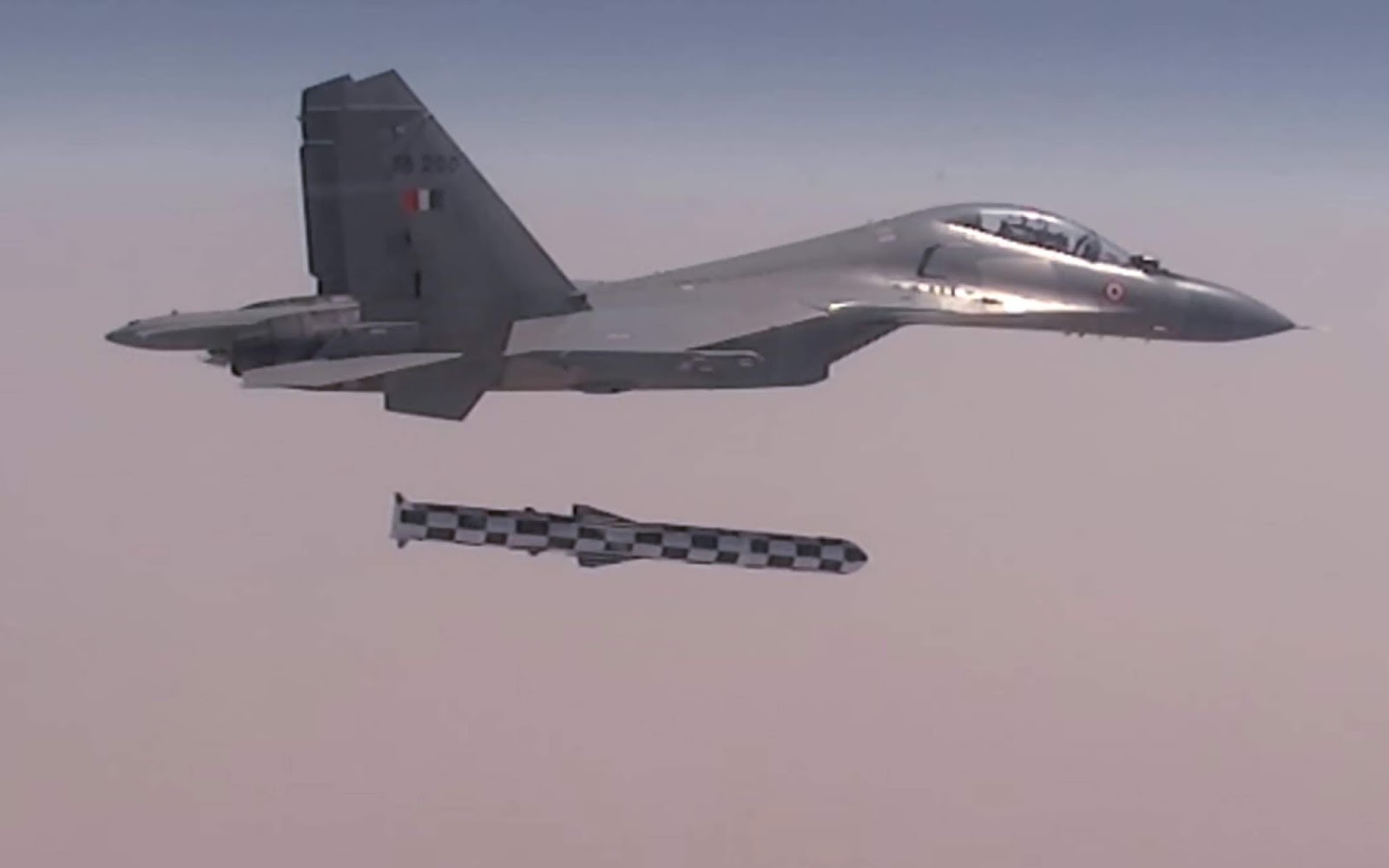
Q4. Would investment in futuristic anti-stealth capabilities, in terms of radar etc., be a cost-effective way of deterring China? Kindly comment.
Ans. Countering stealth is a clear priority for the Indian Air Force. Investment in anti-stealth capabilities is certainly a cost-effective way of strengthening deterrence, provided it forms part of a complete detect-and-neutralise chain. The kill-chain logic I described in the context of Operation Sindoor applies here just as fully.
Detection through specialised anti-stealth radars is the primary prerequisite for countering stealth and other contemporary threats. The IAF has taken the necessary steps towards capability development against stealth platforms.
No single sensor, however, will defeat stealth on its own. The IAF is therefore building a networked solution that draws on multiple ground-based and airborne radar systems to maximise the probability of detecting a low-observable target. A target is detected by one sensor, correlated by another, and then tracked by a fused network.
Detection, in turn, must be matched by the ability to neutralise. This requires a tiered approach. Hard kill, through surface-to-air guided weapons, missiles and directed-energy weapons, destroys the threat. Soft kill, through jammers and GPS denial, disrupts it.
Deterrence ultimately rests on an adversary’s certainty that its platforms will be seen, tracked and engaged. With a layered, networked sensor grid and a tiered response, the IAF is steadily building exactly that certainty.
Q5. In military circles, there is an ongoing debate that air forces of the future would cease to be a force in themselves and would be reduced to a support arm of land forces. Do you agree with this assessment?
Ans. I would not agree with that assessment. I do agree that the future battlefield will be increasingly joint and multi-domain, and that no Service will be able to achieve the desired national objectives entirely on its own. But jointness must not be confused with the subordination of one form of military power to another. That is the line the Indian Defence Services hold, and such arguments do not find currency here.
Air power has certain inherent characteristics: speed, reach, flexibility, precision, and the ability to rapidly concentrate and redistribute combat power. These characteristics allow it to create effects at the tactical, operational and strategic levels simultaneously. Some of those effects directly support land and maritime operations, and the IAF will always deliver them with full commitment. Others, however, are entirely independent of the immediate battle on the ground or at sea.
I have already touched on the many roles air power performs beyond striking fixed targets, from protecting our airspace and controlling the air to surveillance and the suppression of enemy air defences. To these I would add attacking the adversary’s air power, engaging strategic and operational targets in depth, providing strategic air mobility and, above all, creating deterrence. None of these is merely a support function. Each contributes directly to achieving the nation’s military and political objectives.
In a genuinely joint force, each Service is valued for the unique effects it brings, and each is employed where it can make the greatest difference. Air power’s contribution will only grow as warfare becomes faster, deeper and more multi-domain. The Indian Air Force will continue to fight as an integral part of the joint force, as a partner to our sister Services and never as a mere adjunct to any of them, while retaining the strategic reach and independent capability on which the nation depends.
Q6. What is the IAF’s opinion of the Su-57 offer from Russia?
Ans. As I mentioned earlier, every induction decision in the IAF follows a capability-driven approach, based on threat assessment, operational gaps and long-term strategic needs. The proposal is being assessed on those terms, and no decision has been taken on the case. It would not be appropriate for me to comment further at this stage.

